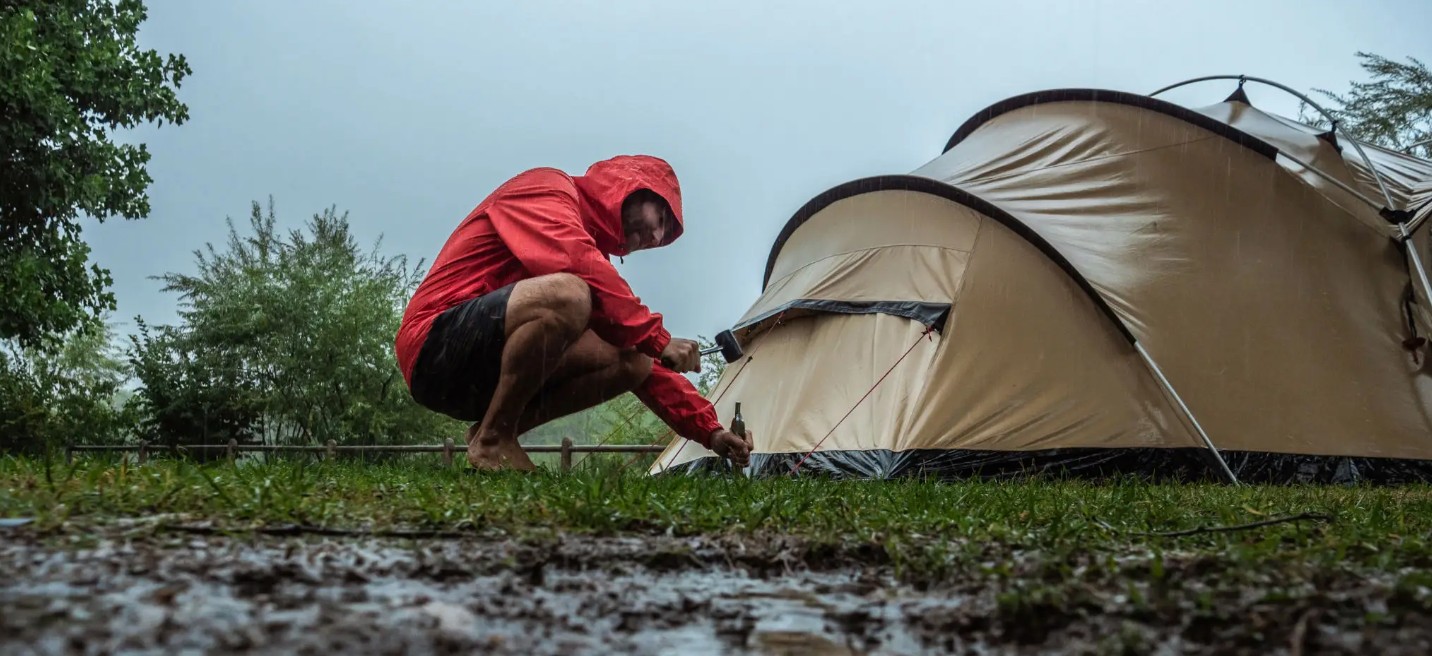
Let me start with the most important advice I can give: if the forecast calls for severe weather — I’m talking thunderstorms, flooding, or wind gusts over 40 mph — cancel the trip or take the RV. A powered RV with AC, a dry couch, and a bathroom is infinitely better than a soggy tent and kids who are already plotting their escape. There’s no trophy for camping through a storm, and nobody remembers the “character-building” night they spent in a puddle.
That said, sometimes the rain catches you by surprise. Maybe you’re already at the campground, tent is up, and the skies open up. Or maybe it’s just a light, steady rain — the kind that’s more annoying than dangerous. In those cases, here’s how to keep things from turning miserable.
Before You Go: Set Yourself Up for Success
The difference between a tolerable rainy camping trip and a nightmare usually comes down to what you did before you left home.
Waterproof Everything Before You Pack
The time to waterproof your tent, rain fly, and gear is NOT when you’re already in the rain. Do this at home on a sunny afternoon:
- Seam seal your tent — Especially the floor seams and any spots where the rain fly overlaps. A $10 tube of seam sealer is worth its weight in gold when it’s pouring.
- Spray your rain fly and tent floor with a waterproofing treatment. Most tents come factory-treated, but after a season or two, that wears off.
- Check your rain fly guy lines — If they fray or stretch, replace them before you go.
Pack Like It’s Definitely Going to Rain (Even If It Isn’t)
I pack for rain on every single camping trip, regardless of the forecast. Here’s my rainy-day packing list:
For the tent:
- Extra tent stakes and guy lines (wind and rain love to test your setup)
- A small mallet or rock for driving stakes through wet ground
- A ground tarp (one size smaller than your tent floor — you don’t want water wicking under the tent)
For everyone:
- Waterproof rain jackets — not just “water-resistant.” There’s a difference, and you’ll discover it the hard way when you’re soaked to the bone.
- Rain pants or at least quick-dry pants (jeans stay wet forever)
- Waterproof boots or boots with a waterproofing spray treatment
- Wool or synthetic socks — cotton socks in the rain are a bad idea
- A wide-brimmed rain hat or at least a good hood
Extra gear:
- Dry bags or large Ziploc bags for clothes, electronics, and sleeping bags
- A pack cover or dry backpack
- Extra towels — the small hand towels are great for wiping down wet gear
Setting Up Camp in the Rain
If you arrive at your campsite and it’s already raining, don’t panic. Just work methodically.
Find the Right Spot
Look for:
- Slightly elevated ground — Avoid low-lying areas where water will pool
- Natural windbreaks — Trees or large rocks on the windward side
- NOT under dead branches or near tall, isolated trees — Lightning and falling limbs are real concerns
- Away from dry creek beds — Even a small thunderstorm can turn these into rushing water
Pitch the Rain Fly First
Before you even touch the tent body, get the rain fly up and staked out. This gives you a dry workspace to assemble the rest of the tent. It also means if a sudden downpour hits while you’re setting up, at least your main tent structure stays dry.
Stake It Down Like You Mean It
Rain usually brings wind. Stakes should be driven in at a 45-degree angle away from the tent, with guy lines tensioned on all corners and mid-panel points. A well-staked tent can survive 30+ mph winds. A poorly-staked tent becomes a kite.
Use the Ground Tarp Correctly
Fold any excess tarp edge UNDER the tent floor, not out from under it. If the tarp extends beyond the tent floor, rainwater will run down onto your tent floor. Tucking it under keeps water from sneaking in.
Keeping the Inside Dry
Even with a perfectly sealed tent, moisture finds a way. Here’s how to manage it:
Ventilation Is Your Best Friend
It sounds counterintuitive, but you need airflow inside the tent to prevent condensation. Open the vestibule door and any upper vents. Condensation from breathing, cooking, and wet gear will build up and drip on you if there’s no airflow.
Create a Mudroom Zone
Use your tent’s vestibule (the covered area outside the main body) as a staging area. Take off wet rain gear and muddy boots there before stepping inside. Lay down a small tarp or piece of cardboard in the vestibule to create a clean transition zone.
Keep Wet Gear Outside
Wet jackets, rain pants, and muddy boots belong outside or in the vestibule. Don’t bring them into the main tent body. You’ll create a swamp inside within hours.
Sleep Off the Ground
If the ground is wet, use a sleeping pad with a high R-value (insulation rating). A foam pad underneath an inflatable pad works great. Sleeping directly on a wet ground sheet is miserable and dangerous — you’ll lose body heat fast.
Cooking and Eating in the Rain
Cooking in the rain is where things get interesting. Here’s how to pull it off:
Cook Under Cover
Use your car’s hatchback, a large camping canopy, or — if you have one — a tent with a full vestibule big enough to cook in. Never bring a camp stove inside the tent (carbon monoxide risk, even in a vestibule). If you can’t cook under cover, make one-pot meals that require minimal prep time.
Keep Your Fuel Dry
Wet fuel = no fire. Keep your canister or fuel bottle in a dry bag until the last second. If you use liquid fuel, keep it warm (but not hot) to maintain pressure in cold rain.
Simplify the Menu
Rainy camping is NOT the time for a five-course feast. Go with:
- Pre-prepped meals you can dump into a pot
- Hot drinks (hot cocoa, tea, coffee) in a thermos
- Snacks that don’t require cooking
Protect the Firewood
Keep your firewood under a tarp or in the car. Wet firewood is useless — it smokes more than it burns. If your wood gets wet, use fire starter sticks or dryer lint to get it going.
Managing the Kids (and Your Sanity)
Kids don’t care about the “adventure” of rain. They care that they’re cold, wet, and bored. Here’s how to keep peace:
Dry Clothes Are Non-Negotiable
Pack one complete set of dry clothes per person in a waterproof bag. When the rain stops (even briefly), get everyone into dry socks, a dry hoodie, and dry pants. The difference between a kid who’s mildly uncomfortable and a kid who’s full-on melting down is usually just dry socks.
Create a Tent Entertainment Kit
Pack a dedicated rainy-day bag with:
- Card games or travel board games
- Books or a tablet with downloaded movies
- Colouring books and crayons
- A deck of cards
- Snacks they don’t normally get (this buys you at least 30 minutes of goodwill)
Short, Purposeful Activities
If you must go outside, keep it brief and goal-oriented:
- “Let’s go check out the creek!” — 15 minutes of outdoor time
- “Help me gather firewood for when it stops raining” — gives them a job
- Quick hike on a nearby covered trail if the rain is light
Accept That Screen Time Limits Are Out the Window
On a rainy camping trip, I let the kids watch movies in the tent as long as they want. The normal screen time rules go out the window when everyone is cooped up. Your sanity is worth it.
When the Rain Actually Stops
Here’s the thing about rain: it usually does stop, even if just for a little while. When it does:
Air Out Everything
Open the tent wide. Hang wet sleeping bags and clothes on lines or over chairs. If you have sun, let it do its thing. Even without sun, airflow helps.
Check the Ground Around Your Tent
Water can pool around the edges. Dig a small trench to redirect it away from the tent floor. Don’t dig into someone else’s site — just move water away from your own space.
Start a Fire (If Allowed)
A good campfire is the best rainy-camp mood-lifter. It dries gear, provides warmth, and makes everyone feel like the trip was worth it. Use dry tinder you packed from home — don’t rely on finding dry wood in the rain.
Cold + Wet Is the Real Enemy
Rain is manageable. Cold rain is not. The combination of wet and cold causes hypothermia much faster than cold alone.
Watch for these warning signs in your kids:
- Shivering that won’t stop
- Clumsiness or stumbling
- Slurred speech or confusion
- Unusual tiredness or irritability
If someone is cold AND wet, get them into dry clothes immediately. Use a sleeping bag as a cocoon. Give them hot drinks. If you have chemical heat packs, put them in their socks or gloves.
When in doubt, pack everyone into the car with the heater running for 30 minutes. There’s no shame in it.
Final Thoughts
Rainy camping isn’t ideal, but it doesn’t have to ruin your trip. The families who handle it best are the ones who expected rain, packed for it, and treated it as part of the adventure rather than a disaster.
And if it really is a terrible storm? Pack it up, drive to a motel, and order pizza. The campground will still be there next time.